Table Of Contents
Hydration is Key
Follow a Kidney-Friendly Diet
Exercise is Important
Have a Weight Management Plan
Avoid Supplements
Prevent the Kidney Stone Recurrence
Conclusion
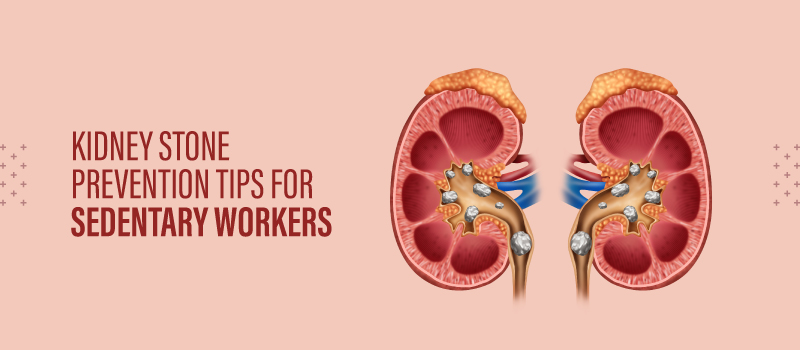
Kidney stones refer to hard deposits of minerals in the urine drainage area of your kidneys. They cause excruciating pain when they pass through your urinary tract. Although anyone can develop kidney stones at any age, these tend to be more common in people living a sedentary lifestyle. If your work routine involves prolonged hours of sitting, you need to take extra care of your hydration and diet.
The lack of physical activity, dehydration, and unhealthy dietary habits are a few culprits that are to be blamed for a higher risk of kidney stones among these people. Sadly, there’s no guaranteed method to eliminate your risk of developing these crystals, especially if the condition runs in your family. However, a few steps can go a long way in kidney stone prevention, particularly for sedentary workers. If you are wondering how to prevent kidney stones, read on.
Hydration is Key
How can you tell if you drink enough water daily? Ideally, a person should drink 8-10 glasses of water, or around 2-3 litres, a day. This ensures an adequate urine output. Kidney stones occur in people with concentrated urine, rich in minerals that might form crystals. If you spend too much time in the sun, sweat a lot, or exercise too much, you need additional fluids to ensure adequate kidney filtration and urine formation.
Dehydration isn’t just a problem for athletes and those living in hot areas, but it’s equally common among sedentary workers, as they tend to forget hydration. To know if you are drinking enough, check the color of your urine. It should be clear or pale yellow. Concentrated urine appears darker.
Follow a Kidney-Friendly Diet
Here are a few dietary tips for preventing kidney stones.
Get Calcium from the Right Sources: Most kidney stones are calcium-oxalate stones. That’s given calcium a bad reputation. There’s a common misconception that a diet rich in calcium can increase your risk of developing kidney stones. In reality, stones are more common in people who consume a low-calcium diet. If you’re looking for foods that reduce your risk for kidney stones, include calcium in your diet. You should get enough calcium from dairy, leafy greens, and other dietary sources. Try not to go overboard with supplements, though. That can increase your risk.
Cut Back on Sodium: Your biggest enemy is sodium. A salt-rich diet, such as processed foods, canned vegetables, baking soda, and condiments, should be restricted. Excessive salt in your urine makes it harder for calcium to be reabsorbed into your blood. This leads to too much calcium in your urine, which can eventually turn into stones. The most viable way to prevent kidney stones is by keeping the calcium content in your urine as low as possible. That happens when you cut back on your sodium intake.
Limit Oxalate-Rich Foods: Another food to avoid with kidney stones is oxalate-rich foods. Oxalate binds with calcium in your urine, forming crystals. It’s a naturally occurring compound found in nuts, seeds, leafy greens, legumes, fruits, potatoes, chocolate, tea, and grains. These foods are also rich in many essential nutrients, which are important for your overall health. So, the best you can do is combine these foods with a calcium-rich diet. This will reduce the absorption of oxalates in your gut and prevent these two components from binding in your kidneys and passing into urine.
Avoid Sugary Drinks: Sodas, caffeinated beverages, cold drinks, energy drinks, and fruit juices with high fructose content can increase calcium in your urine. Replace them with herbal tea, sparkling water, or lemon water. These are healthier alternatives.
Exercise is Important
You don’t have to engage in strength training, weightlifting, or high-intensity workout sessions. However, if you lead a sedentary life, the least you can do is take short breaks (every 30-50 minutes) from work and move. Take a walk around your office, go swimming, practice light stretching, or consider cycling for your commute. Exercise helps improve blood flow to the kidneys, enhancing kidney function and also increases your urine output and reduces mineral imbalance, reducing the risk of the minerals binding to form stone crystals.
Have a Weight Management Plan
There’s no clear-cut answer to how kidney stones are formed. Many factors contribute to increasing your risk. One of them is obesity. Researchers have not established why obesity increases the risk, but it’s believed that higher than normal BMI can affect urine composition, inflammation, and oxidative stress—all of which can make you more prone to developing stones.
Avoid Supplements
In case you are already suffering from Kidney stones, Do not start vitamin C, calcium, or any supplements without consulting your doctor. Kidney stones can form if you take an excessive amount of these supplements. Your urologist will examine the effect of supplements on your risk of developing kidney stones and recommend an appropriate dosage accordingly.
Prevent the Kidney Stone Recurrence
The biggest challenge people with kidney stones experience is not just the pain associated with passing the stone through urine but the high chances of stone recurrence. Studies show that people who’ve had kidney stones once are 35-50 percent more likely to have another one in the next five years compared to others. If you do not follow your urologist’s nutrition advice or kidney stone prevention tips, your risk of a recurring stone increases.
Conclusion
If you are at an increased risk of kidney stones, whether because of a sedentary lifestyle or a family history, you must follow preventive care to mitigate the risk. An effective kidney stone diet, moderate exercise, proper hydration, and weight management can greatly minimize your risk of developing kidney stones, even if you are a sedentary corporate employee.
If you are concerned about your risk of getting kidney stones because of a medical or family history, talk to urologists and nephrologists at ainu. We are equipped with advanced modern medical tools that enable us to perform many surgical procedures laparoscopically and through robot-assisted technology. Our qualified team of urologists can assess your risk level and provide dietary advice to help lower your risk of kidney stones. We can also offer personalized treatment plans to remove kidney stones safely and through minimally invasive procedures.
Posted in Kidney StonesLeave a Commenton Kidney Stone Prevention Tips for Sedentary WorkersEditKidney Stone Prevention Tips for Sedentary Workers
Is Laser Surgery the Best Option for Treating Kidney Stones?
Posted on November 17, 2025 by Prasad
Is Laser Surgery the Best Option for Treating Kidney Stones?
Table Of Contents
What Are Kidney Stones?
How Laser Treatment for Kidney Stones Works
Types of Kidney Stone Laser Surgeries
Advantages of Laser Surgery for Kidney Stones
Side Effects of Laser Surgery for Kidney Stones
How Can AINU Provide the Best Laser Treatment Procedures for Kidney Stones?
Final Words
Frequently Asked Questions
Kidney stones can cause excruciating pain and discomfort, which may hamper one’s quality of life. Kidney stones are small, hard, crystal-like deposits found inside one’s kidneys formed due to mineral buildup in the urinary tract. Dehydration, weight loss surgery, obesity, inflammatory bowel diseases, and eating foods that are too salty are some of the many causes of kidney stone formation.
If left untreated, kidney stones can result in severe health conditions; in fact, one can hardly bear the intense pain! Fortunately, certain surgical procedures can treat kidney stones and aid in removing them with minimal invasion, thanks to modern medicine. We will discuss the advantages of laser surgery for kidney stones and how the process works. In the end, we have also added some frequently asked questions about lasers for kidney stones.
What Are Kidney Stones?
Kidney stones are hard salt and mineral deposits that can be formed in the kidneys for numerous reasons. For instance, leading a sedentary lifestyle, following an unhealthy diet, not drinking enough water, and taking certain minerals in excessive amounts can create kidney stones in the urinary tract.
Some common signs of kidney stones include severe pain in the side or back, vomiting, nausea, blood in urine, and an urgent need to urinate. Smaller kidney stones may be passed out of the urinary tract through medications. However, individuals with larger stones might need to undergo surgery to get rid of them.
How Laser Treatment for Kidney Stones Works
Kidney stone laser treatment, or lithotripsy, is a procedure that helps break down kidney stones into tinier fragments using minimal invasion. As a result, it allows the stones to pass through the urinary tract easily. Lithotripsy is beneficial for people with large and hard stones that are difficult to pass naturally.
A kidney stone laser treatment procedure is performed by a certified urologist, who uses a specialized laser that emits concentrated energy waves to break down the crystals. The surgery is usually performed under sedation or general anesthesia. The laser targets the stones in the ureter or kidneys to ensure their fragmentation.
Once the large stones are broken down, they can be passed through urination naturally, or the urologist may use a special tool called a ureteroscope. It is a thin tube inserted through the bladder and urethra to remove them safely. The urologist may also place a stent in the ureter temporarily if they feel the need to. It prevents any possible blockages while the stone pieces are being flushed out from the body, ensuring smoother urine flow.
Types of Kidney Stone Laser Surgeries
There are two types of laser surgery for kidney stones: Holmium Laser Lithotripsy and Thulium Laser Lithotripsy.
Holmium Laser Lithotripsy: Being one of the most common laser surgeries, Holmium Laser Lithotripsy effectively aids in breaking down kidney stones of diverse sizes. It uses energy pulses to treat ureteral stones and is considered an effective procedure for urolithiasis management.
Thulium Laser Lithotripsy: It is a smarter and more modern technology known for its high efficacy and precision in fragmenting kidney stones. This procedure can generate smaller specks of stone dust by delivering high-power beams.
Advantages of Laser Surgery for Kidney Stones
Here are the benefits of undergoing laser treatment to flush out kidney stones.
It involves a minimally invasive procedure.
It ensures faster and more natural recovery than traditional stone removal surgeries.
It can treat and remove stones of various sizes.
The patient will experience less pain and discomfort during and after the surgery.
It has high success rates.
It comes with lower risks of the stone fragments blocking the ureter.
Laser surgery involves reduced bleeding and inflammation, as it involves gentle healing of the tissues.
Side Effects of Laser Surgery for Kidney Stones
You may experience the following side effects of laser surgery for kidney stones.
A burning sensation while urinating
Pain in the area where the stone was treated and the lower back or sides
Feelings of fatigue and nausea
Blood in urine (it may persist for a few days after the surgery)
Fever or chills
Bruising on the back or sides
Having a sudden urge to urinate
Gas cramps or constipation for up to a few days
Your urologist may recommend you rest as much as possible after undergoing the laser procedure. You must also avoid participating in sports activities or vigorous exercise for up to a week. Also, you should keep yourself hydrated by drinking sufficient fluids. Besides taking the prescribed medications, consider taking a warm bath to avoid infections.
How Can AINU Provide the Best Laser Treatment Procedures for Kidney Stones?
AINU takes utmost care to maintain precision in surgical procedures. We house certified and experienced urologists and nephrologists to address the urological issues in both genders. AINU uses state-of-the-art technologies to leverage smart tools and advancements in medical research and development.
Final Words
We hope the article helped you understand kidney stones and how laser surgery works. It is one of the most preferred procedures to remove kidney stones of varying sizes. Also, keep in mind the risks of laser surgery for kidney stones and discuss with your urologist to determine whether laser treatment is the right solution for you.