5 Amazing Foods for Healthy Kidneys

Kidneys are extremely vital to your body as their main job is to filter your blood.Include these foods in your diet if you are suffering from kidney-related diseases or to maintain healthy kidneys.

Red bell peppers:
Low in potassium and an excellent source of vitamin C and vitamin A, as well as vitamin B6, folic acid and fiber, red bell peppers contain lycopene, an antioxidant that protects against certain cancers. Have them raw with dip, as a salad or snack served on crackers or bread.

Apples:
Known to reduce cholesterol, prevent constipation, protect against heart disease and reduce the risk of cancer, apples are high in fiber and anti-inflammatory compounds.

Cabbage:
High in vitamin K, vitamin C and fiber, cabbage is also a good source of vitamin B6 and folic acid. It is known to protect against cancer, as well as improve cardiovascular health. Add raw cabbage to coleslaw and serve it as a side dish.

Garlic:
Garlic helps prevent plaque from forming on your teeth, lowers cholesterol and reduces inflammation. Due to its flavor, garlic powder is a great substitute for garlic salt that can be added to those on the dialysis diet.

Onions:
Rich in flavonoids, especially quercetin, a powerful antioxidant that works to reduce heart disease and protects against many cancers, onions are low in potassium and a good source of chromium, a mineral that helps with carbohydrate, fat and protein metabolism.

Is Laser Surgery the Best Option for Treating Kidney Stones?

Table Of Contents

  • What Are Kidney Stones?
  • How Laser Treatment for Kidney Stones Works
  • Types of Kidney Stone Laser Surgeries
  • Advantages of Laser Surgery for Kidney Stones
  • Side Effects of Laser Surgery for Kidney Stones
  • How Can AINU Provide the Best Laser Treatment Procedures for Kidney Stones?
  • Final Words
  • Frequently Asked Questions

Kidney stones can cause excruciating pain and discomfort, which may hamper one’s quality of life. Kidney stones are small, hard, crystal-like deposits found inside one’s kidneys formed due to mineral buildup in the urinary tract. Dehydration, weight loss surgery, obesity, inflammatory bowel diseases, and eating foods that are too salty are some of the many causes of kidney stone formation.

If left untreated, kidney stones can result in severe health conditions; in fact, one can hardly bear the intense pain! Fortunately, certain surgical procedures can treat kidney stones and aid in removing them with minimal invasion, thanks to modern medicine. We will discuss the advantages of laser surgery for kidney stones and how the process works. In the end, we have also added some frequently asked questions about lasers for kidney stones.

What Are Kidney Stones?

Kidney stones are hard salt and mineral deposits that can be formed in the kidneys for numerous reasons. For instance, leading a sedentary lifestyle, following an unhealthy diet, not drinking enough water, and taking certain minerals in excessive amounts can create kidney stones in the urinary tract.

Some common signs of kidney stones include severe pain in the side or back, vomiting, nausea, blood in urine, and an urgent need to urinate. Smaller kidney stones may be passed out of the urinary tract through medications. However, individuals with larger stones might need to undergo surgery to get rid of them.

How Laser Treatment for Kidney Stones Works

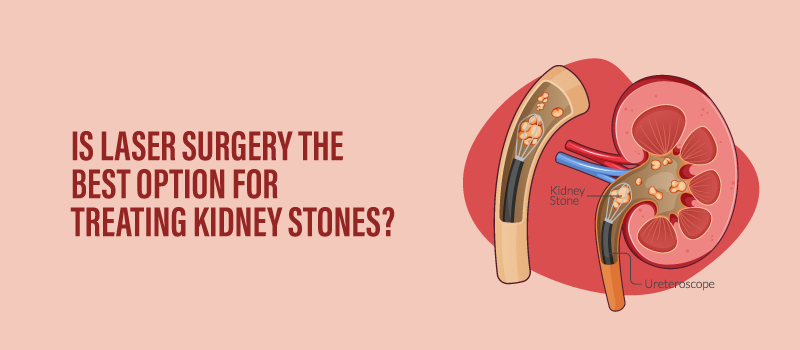
Kidney stone laser treatment, or lithotripsy, is a procedure that helps break down kidney stones into tinier fragments using minimal invasion. As a result, it allows the stones to pass through the urinary tract easily. Lithotripsy is beneficial for people with large and hard stones that are difficult to pass naturally.

A kidney stone laser treatment procedure is performed by a certified urologist, who uses a specialized laser that emits concentrated energy waves to break down the crystals. The surgery is usually performed under sedation or general anesthesia. The laser targets the stones in the ureter or kidneys to ensure their fragmentation.

Once the large stones are broken down, they can be passed through urination naturally, or the urologist may use a special tool called a ureteroscope. It is a thin tube inserted through the bladder and urethra to remove them safely. The urologist may also place a stent in the ureter temporarily if they feel the need to. It prevents any possible blockages while the stone pieces are being flushed out from the body, ensuring smoother urine flow.

Types of Kidney Stone Laser Surgeries

There are two types of laser surgery for kidney stones: Holmium Laser Lithotripsy and Thulium Laser Lithotripsy.

  • Holmium Laser Lithotripsy: Being one of the most common laser surgeries, Holmium Laser Lithotripsy effectively aids in breaking down kidney stones of diverse sizes. It uses energy pulses to treat ureteral stones and is considered an effective procedure for urolithiasis management.
  • Thulium Laser Lithotripsy: It is a smarter and more modern technology known for its high efficacy and precision in fragmenting kidney stones. This procedure can generate smaller specks of stone dust by delivering high-power beams.

Advantages of Laser Surgery for Kidney Stones

Here are the benefits of undergoing laser treatment to flush out kidney stones.

  • It involves a minimally invasive procedure.
  • It ensures faster and more natural recovery than traditional stone removal surgeries.
  • It can treat and remove stones of various sizes.
  • The patient will experience less pain and discomfort during and after the surgery.
  • It has high success rates.
  • It comes with lower risks of the stone fragments blocking the ureter.
  • Laser surgery involves reduced bleeding and inflammation, as it involves gentle healing of the tissues.

Side Effects of Laser Surgery for Kidney Stones

You may experience the following side effects of laser surgery for kidney stones.

  • A burning sensation while urinating
  • Pain in the area where the stone was treated and the lower back or sides
  • Feelings of fatigue and nausea
  • Blood in urine (it may persist for a few days after the surgery)
  • Fever or chills
  • Bruising on the back or sides
  • Having a sudden urge to urinate
  • Gas cramps or constipation for up to a few days

Your urologist may recommend you rest as much as possible after undergoing the laser procedure. You must also avoid participating in sports activities or vigorous exercise for up to a week. Also, you should keep yourself hydrated by drinking sufficient fluids. Besides taking the prescribed medications, consider taking a warm bath to avoid infections.

How Can AINU Provide the Best Laser Treatment Procedures for Kidney Stones?

AINU takes utmost care to maintain precision in surgical procedures. We house certified and experienced urologists and nephrologists to address the urological issues in both genders. AINU uses state-of-the-art technologies to leverage smart tools and advancements in medical research and development.

Final Words

We hope the article helped you understand kidney stones and how laser surgery works. It is one of the most preferred procedures to remove kidney stones of varying sizes. Also, keep in mind the risks of laser surgery for kidney stones and discuss with your urologist to determine whether laser treatment is the right solution for you.

Kidney Stones in Children: A Growing Concern Parents Should Know About

Table Of Contents

  • What Is a Reconstructive Urology Procedure?
  • Common Types of Urology Reconstructive Surgery
  • What Is the Most Common Surgery for a Urologist?
  • What Is Reconstructive Bladder Surgery?
  • What Is the Success Rate of Bladder Reconstruction Surgery?
  • Pelvic Health Benefits of Reconstructive Urology
  • Why Choose the Asian Institute of Nephrology and Urology?
  • Frequently Asked Questions

When we think of kidney stones, we usually picture adults doubled over in pain. But did you know that kidney stones in children are becoming increasingly common? This condition, once rare in kids, is now being diagnosed more frequently in infants, school-aged children, and teens alike.

The rise in kidney stone cases has caught the attention of parents and healthcare professionals around the world. Diet, hydration, lifestyle, and genetic factors all play a role; and awareness is the first step in protecting your child’s health.

In this article, we’ll explore the causes, symptoms, diagnosis, and treatment options for kidney stones in children. You’ll also find answers to common questions, when to see a pediatric urologist, plus practical prevention tips you can start using today.

Can children get kidney stones?

Yes, children can absolutely develop kidney stones. Though once considered an adult-only issue, pediatric urologists now report an increasing number of cases each year. Children of all ages, from toddlers to teens, can experience stones in the kidneys or urinary tract.

Early diagnosis is important, as untreated stones can lead to infections, blockages, or long-term kidney damage.

What causes kidney stones in children?

There isn’t one single cause, rather, several factors can contribute:

  1. Dehydration: One of the most common causes. Many kids don’t drink enough water, especially during play or sports. Less fluid in the body means minerals and salts can crystallize in the kidneys, forming stones.
  2. Dietary habits: High salt intake, sugary drinks, processed foods, and too much animal protein all increase stone risk. Unfortunately, these are common elements in many children’s diets today.
  3. Family history: If a parent or sibling has had kidney stones, the chances rise significantly.
  4. Medical conditions: Certain metabolic issues (like hypercalciuria), urinary tract abnormalities, and chronic infections can predispose children to stone formation.
  5. Obesity: Excess weight is linked to a higher risk of kidney stones in children, as well as other urological problems.

What are the symptoms of kidney stones in children?

Recognizing the signs early can make all the difference. Watch for:

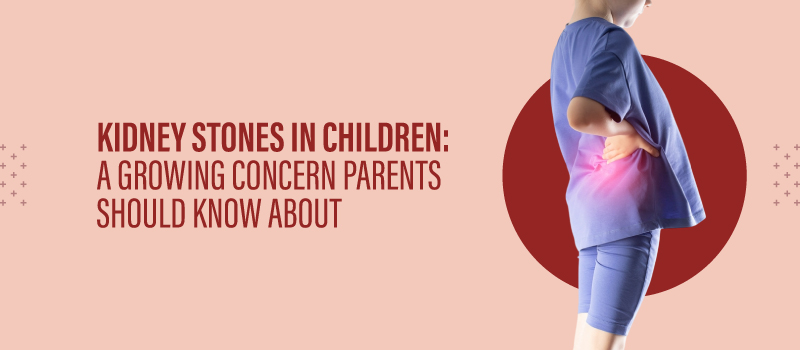
  • Sharp or cramping pain in the side, abdomen, or lower back
  • Blood in urine (pink, red, or brown color)
  • Nausea or vomiting
  • Frequent urge to urinate or pain while urinating
  • Restlessness, irritability, or discomfort (especially in younger children)
  • Fever or chills if infection is present

Not all stones cause pain right away. Sometimes the first sign may be blood in the urine during a routine checkup. If your child shows any of these symptoms, consult a pediatric urologist promptly.

How are kidney stones diagnosed in kids?

Pediatric diagnosis requires a gentle, child-friendly approach. The typical process includes:

  • Medical history & physical exam: This helps identify dietary risks, genetic links, or underlying conditions.
  • Urine tests: To check for crystals, blood, infections, and chemical imbalances.
  • Blood tests:These assess calcium, phosphorus, uric acid, and other markers linked to stone risk.
  • Imaging:Ultrasound is often the first choice because it avoids radiation. If more detail is needed, a low-dose CT scan may be used.

A skilled pediatric urologist can interpret the results and recommend the best course of action based on your child’s unique needs.

Are kidney stones in children dangerous?

They can be. While some stones pass naturally, untreated stones can lead to complications:

  • Pain and discomfort
  • Urinary tract infections
  • Blockage of urine flow, which can damage the kidneys
  • Recurrent stones if prevention isn’t addressed
  • Chronic kidney disease (rare, but possible with repeated untreated stones)

The good news? With prompt care and good follow-up, most kids recover fully. Seeing an experienced pediatric urologist ensures that your child’s kidneys stay healthy and strong.

How are kidney stones in children treated?

Treatment depends on the size, type, and location of the stone, and on your child’s age and overall health. Options include:

  • Increased fluids: Encouraging your child to drink plenty of water helps flush out small stones naturally.
  • Pain management: ver-the-counter pain relievers may be recommended during stone passage.
  • Medical therapy: In some cases, medications can help dissolve certain types of stones or prevent new ones from forming.
  • Minimally invasive procedures:

    Extracorporeal Shock Wave Lithotripsy (ESWL) uses sound waves to break stones into smaller pieces that can be passed more easily.

    Ureteroscopy involves using a small scope to locate and remove or break up the stones.

    Percutaneous nephrolithotomy may be used for larger or complex stones, through a tiny incision in the back.

The goal is always to relieve symptoms quickly while preserving kidney function, with as little discomfort and downtime as possible.

How to prevent kidney stones in children?

Once a child has had one stone, they are more likely to develop another. Prevention is key! Here’s what parents can do:

  • Promote good hydration: Water is the best drink, sugary sodas and juices can make things worse. Teach kids to drink regularly throughout the day.
  • Encourage a balanced diet: Low-sodium, high-fiber meals with fruits and vegetables help prevent stone formation.
  • Limit salty, processed, and high-oxalate foods (like chips, fast food, spinach, and chocolate) when needed.
  • Promote a healthy weight and active lifestyle:Obesity is a risk factor.
  • Stay on top of medical follow-ups: Regular check-ins with a pediatric urologist help monitor kidney health and catch any new issues early.

Why choose the Asian Institute of Nephrology and Urology?

When your child’s health is at stake, you want the best care possible. The Asian Institute of Nephrology and Urology (AINU) offers expert treatment for kidney stones in children, led by a team of experienced pediatric urologists. Our child-friendly approach, advanced technology, and compassionate staff ensure your little one is in good hands, from diagnosis to recovery.

If your child shows signs of kidney stones or has been diagnosed already, don’t wait. Book an appointment with our specialists today, early action can protect your child’s kidney health.

Frequently Asked Questions

1. Can children get kidney stones?

Yes, kidney stones in children are increasingly common today, especially due to dehydration and poor dietary habits.

2. What causes kidney stones in children?

They can be caused by lack of water, poor diet, genetics, certain medical conditions, and obesity.

3. What are the symptoms of kidney stones in children?

Common signs include abdominal pain, blood in urine, nausea, and pain when urinating.

4. How are kidney stones diagnosed in kids?

Doctors use urine and blood tests, along with imaging (typically ultrasound), to identify kidney stones.

5. Are kidney stones in children dangerous?

If untreated, they can lead to infections or kidney damage. With proper care, most cases are resolved safely.


Book an Appointment